


Can the Neubie E-stim machine Restore Motor Control and Strength for Patients with Relapsing Remitting Multiple Sclerosis. The subject was a 34year old female who had been diagnosed with relapsing-remitting Multiple sclerosis (MS). She was officially diagnosed with MS in September of 2019, although was having symptoms as early as2005 at the age of 19. She had an MS relapse around September 2019 which eventually led to her getting diagnosed.
MULTIPLE SCLEROSIS: A Case Report
PERFORMED AT: Recovery Physical Therapy
TREATMENT AND OUTCOME:
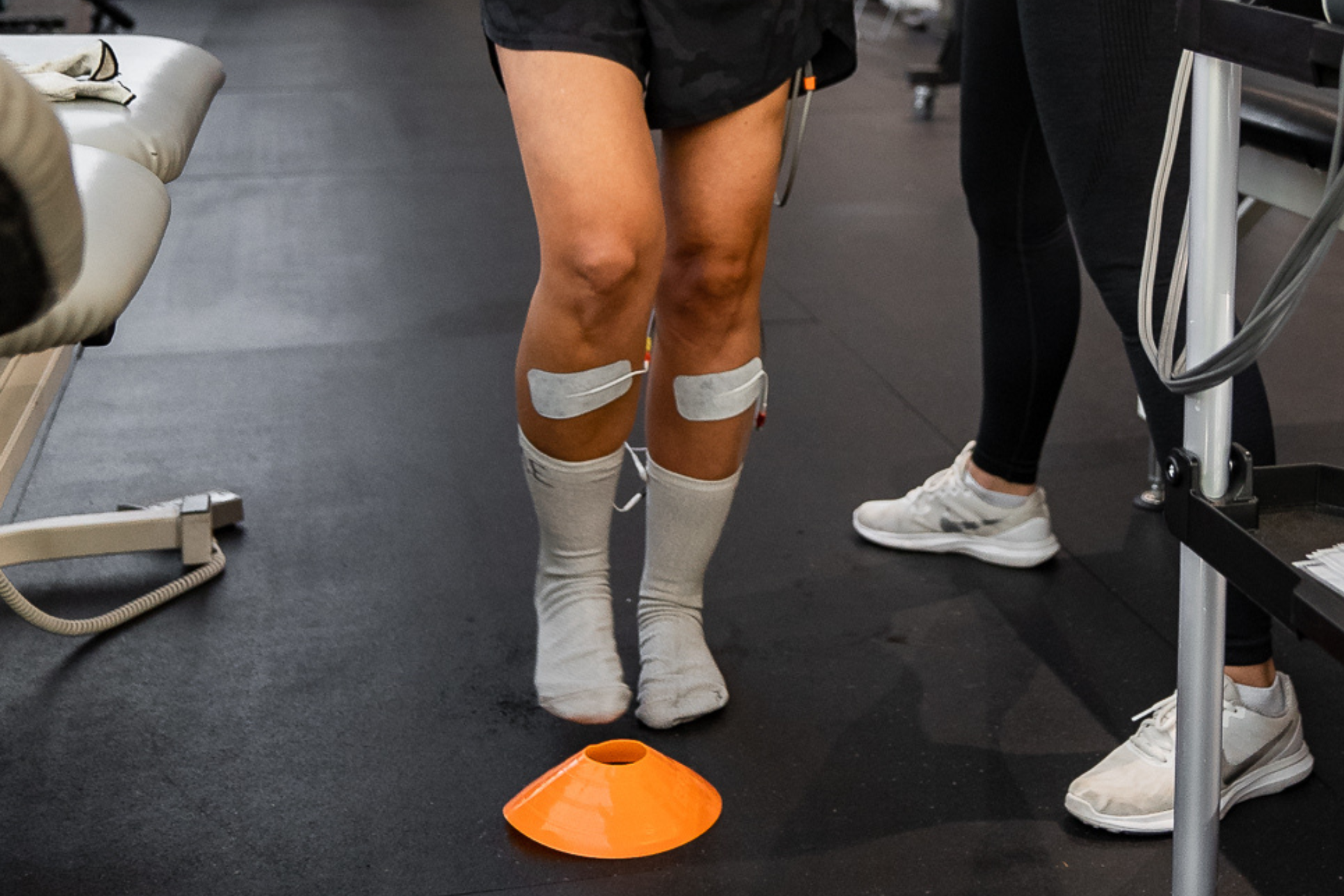
 This patient completed 5 consecutive days of intense training with the Neubie e-stim device. For training, the patient completed a variety of strengthening, cardio, and neuromuscular training, all with the Neubie electrodes attached to various muscle groups. She also completed some sports specific activities while utilising the Neubie e-stim device. Most of the training was completed at high frequency 500 Hz, although the last couple of days she also completed some lower frequency (40 Hz)strengthening sessions. She also completed the Neubie foot and hand bath protocols. At the end of each session she completed the master reset protocol with electrodes placed at the sub occipital region and the feet as she rested to promote parasympathetic nervous activity. Each daily session was 90-120 minutes long. Strength and balance testing was completed pre and post-intervention, as well as use of the FAAM score (Foot & Ankle ability measure).
RESULTS AFTER TREATMENT:
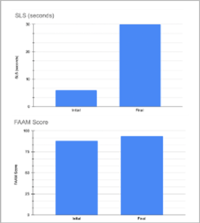
This patient’s 1-rep max leg press score improved dramatically over the 5-day course of training; from 125 to 175 lbs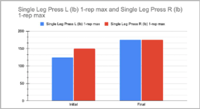 on the left leg, and from 150 to 175 lbs on the right leg. Her ability to maintain single-leg balance on the left leg with eyes closed improved from 6 seconds until loss of balance, to greater than 30seconds after the week of training. Her Foot & Ankle Ability Measure (FAAM score) improved from 88% to 94%. Subjectively, this patient also reported she was able to complete her difficult dance routines with greater ease at the end of the intervention, and reported the clonus in her left foot did not seem to bother her while she was riding her bike as it did prior to the Neubie intervention.
DISCUSSION:
This MS patient was able to demonstrate fairly dramatic objective improvements related to her strength and balance following a week of intense training using the Neubie e-stim device. Her subjective reports were also very positive, reporting improved participation with her dance routines and ability to ride her bike without provoking clonus in the L foot. These positive outcomes are especially notable considering she had recently completed a previous course of traditional physical therapy(without the Neubie e-stim device), which lasted several months and only achieved mild progress. This case study, which only lasted one week, utilised the Neubie machine and was able to produce significant results in a relatively very short time compared to traditional physical therapy without the Neubie machine.
PATIENT PERSPECTIVE:
This patient was very pleased with the results she achieved after a week-long course of training with the Neubie e-stim device. In addition to the measurable strength and balance improvements, and the subjective improvements with her dance routines and cycling, she also reported feeling “less cog-fog” and improved mental focus. Several months after this week long training session she reported continued long-term benefits, and requested to repeat occasional week-long boot-camps using the Neubie machine to further improve her performance and to help manage her MS symptoms
